Pro ANDERSON LOCKSMITH
Locksmith Service

Commercial Mortise Lock Service

Heavy-duty mortise lock hardware is the backbone of commercial security across Anderson, SC — from the medical offices along East Greenville Street to the retail corridors near the Anderson Mall and the industrial facilities off Highway 29. Unlike the cylindrical locksets common on residential doors, a mortise lock set is machined directly into a pocket cut within the door body, giving it a far stronger mechanical footprint and dramatically greater resistance to kick-in and forced-entry attempts. Pro Anderson Locksmith specializes in the full lifecycle of this hardware: supply, installation, repair, cylinder re-keying, and emergency service — all from mobile units that come directly to your location, 24 hours a day, seven days a week.

Open 24 hours, 7 days a week · Licensed, bonded & insured

“

Understanding what you are securing and how the hardware works is the first step toward making an informed decision for your business. Our experienced, insured technicians serve commercial property owners, property managers, HOA facilities, and multi-tenant buildings throughout the Anderson area. Whether you are upgrading aging hardware on a storefront, integrating an electric mortise lock into an access-control system, or dealing with a failed mortise lock cylinder after hours, Pro Anderson Locksmith is the mobile commercial locksmith team Anderson businesses call first. Reach us any time at (704) 850-6756.

What we do

Available 24/7

Day, night, weekends and holidays — a real local locksmith answers and rolls a fully-stocked van.

Fast local response

Based in Anderson, we reach the Anderson area in well under an hour.

Insured & background-checked

Vetted technicians, up-front pricing, and no surprise add-ons when we arrive.

Damage-free entry

We pick and bypass locks the right way, so most lockouts are solved without drilling anything.

01

What Is a Mortise Lock and Why It Matters for Commercial Doors

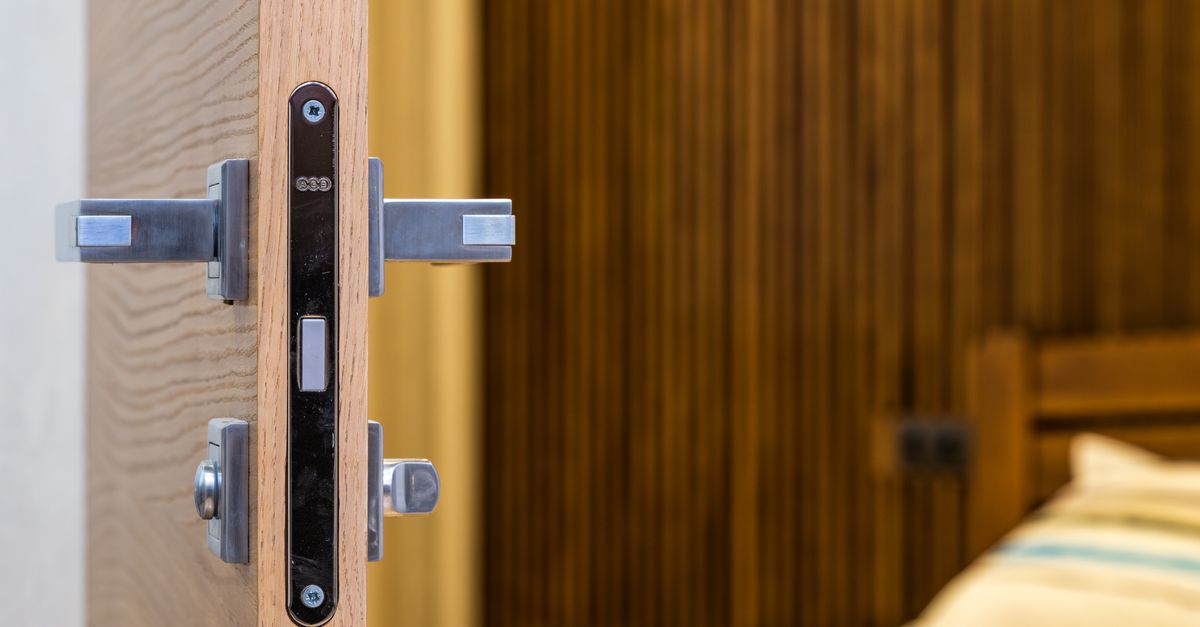
The term 'mortise' comes directly from woodworking and joinery terminology — it describes a rectangular cavity or pocket cut into the edge of a door stile to house a self-contained lock body. Inside that body you will find a latch bolt, a deadbolt, and in many commercial units a separate anti-thrust latch, all actuated by a single trim package. This is fundamentally different from a cylindrical or tubular lockset, where the mechanism is housed in the knob or lever itself. Because the mortise lock set sits recessed and flush within the door, the door retains far more structural material around the hardware, and the mechanism is shielded from direct attack. For commercial doors — hollow metal frames, aluminum storefronts, heavy wood fire-rated assemblies — this geometry matters enormously. Brands like Corbin Russwin mortise lock products and Baldwin mortise lock series have built their commercial reputations on exactly this architecture, and our technicians work with both regularly, along with Schlage, Yale, Sargent, and other hardware lines specified by architects and facilities managers.

From a terminology standpoint, commercial buyers often encounter confusing jargon: 'function' numbers, 'handing,' 'backset,' 'prep,' and 'ANSI grade.' Function numbers define whether the lock allows passage, classroom, storeroom, or office operation — critical distinctions when specifying hardware for a school annex versus a bank vault anteroom. Handing describes which direction the door swings and which face carries the strike. Our technicians assess all of these variables on-site before any hardware is ordered or installed, ensuring your new mortise lock is the right function for the door and the occupancy — not just the first unit on the shelf. That precision is what separates a skilled commercial locksmith from a general handyman service.
What Is a Mortise Lock and Why It Matters for Commercial Doors — Pro Anderson Locksmith
02

Commercial Mortise Lock Service: Installation, Repair, and Integration

Installing a mortise lock set on an exterior door is a multi-step process that requires precise pocket routing or mortise cutting, careful backset measurement, correct spindle and trim alignment, and proper strike reinforcement in the frame. On commercial jobs in Anderson — whether that is a new tenant fit-out in a downtown mixed-use building or a hardware upgrade on a loading dock door — our mobile units carry the tooling and hardware inventory to complete most installations in a single visit without damaging the existing door or frame. Damage-free methodology is a priority: we use template-guided cutting jigs rather than freehand routing wherever possible, protecting the door's structural integrity and fire rating. After installation every lock is cycled, the latch projection and deadbolt throw are verified, and the strike plate alignment is confirmed under simulated door-closing force.

Our commercial mortise lock service extends well beyond new installs. Common repair calls include worn or cracked lock cases, broken cam followers, stripped spindle hubs, failed cylinder plug retainers, and misaligned strikes caused by building settlement — a common issue in older Anderson structures. We also handle mortise lock cylinder replacement and re-keying without replacing the entire case, which is often the most cost-effective path when hardware is otherwise sound. If your building operates an electric mortise lock as part of an access-control or card-reader system, our technicians can diagnose electrical faults, replace fail-secure or fail-safe solenoid assemblies, and re-integrate the unit with your panel. Smart mortise lock products — those accepting wireless credentials, Bluetooth, or mobile-app control — are increasingly specified on commercial projects, and we service and program several of the leading platforms. Call (704) 850-6756 any time to schedule a site assessment or dispatch a technician immediately.

Locksmith Specialisations, Regulation, and What Anderson Business Owners Should Know — Pro Anderson Locksmith
03

Locksmith Specialisations, Regulation, and What Anderson Business Owners Should Know

Locksmithing encompasses a broad range of specialisations: automotive, residential, commercial, safe and vault, electronic access control, and forensic lock analysis. Commercial mortise lock work sits at the intersection of mechanical locksmithing and light electrical work, requiring knowledge of ANSI/BHMA hardware grades, door-prep standards, and increasingly, networked access-control protocols. In the United States, licensing requirements for locksmiths vary significantly by state — there is no single federal standard. South Carolina does not currently maintain a state-wide mandatory locksmith licensing regime, which means the primary indicators of competence are a technician's verifiable training history, real-world experience with commercial hardware, and the company's insurance coverage. Pro Anderson Locksmith carries insurance and employs technicians with documented hands-on training across mechanical and electronic commercial lock systems — you can ask us directly about our qualifications before any work begins.

For context, the regulatory picture looks different internationally. In the United Kingdom, locksmithing is not statutorily regulated at the national level either, but trade associations such as the Master Locksmiths Association operate voluntary vetting and competency schemes that many consumers use as a trust signal. Several Australian states have moved toward mandatory licensing, and parts of Europe require tradespeople to hold formal vocational qualifications before working on security hardware. In the United States, a handful of states — including Texas, Alabama, and Oklahoma — do maintain licensing boards for locksmiths, creating a patchwork that can confuse business owners researching providers. The practical takeaway for Anderson businesses: ask any provider whether they are insured, ask how long their technicians have been working with commercial mortise hardware specifically, and insist on a written, up-front price confirmation before work begins. We provide exactly that on every call.

What Is a Mortise Lock and Why It Matters for Commercial Doors — Pro Anderson Locksmith
04

Factors That Shape Your Quote and What to Expect When You Call

One of the most common questions we receive from Anderson business owners is some version of: 'How much do locksmiths cost near me?' There is no honest single-number answer for commercial mortise lock work because several variables directly affect the final price. The type and grade of hardware required — a basic storeroom-function mortise case versus a full electric mortise lock with electrified trim — carries very different parts costs. The time of day matters: emergency dispatch at 2 a.m. on a Sunday involves different operational costs than a scheduled weekday installation. Travel distance within our service area, the condition of the existing door prep (whether the mortise pocket is already correctly sized or needs modification), and whether cylinder re-keying is included or billed separately all factor in. For sliding door mortise lock applications — common on glass storefronts and patio-style commercial entries — the hardware itself is a specialized format that differs from standard swinging-door units and is priced accordingly.

What we commit to on every call is this: before any tool touches your door, you will receive a clear, specific price for the scope of work discussed. No surprise line items added after the fact. Our technicians arrive in marked mobile units, carry photo identification, and are prepared to explain every step of the work in plain language. If you are asking yourself how to choose a locksmith for a commercial property, the answer centers on three things: verifiable insurance, demonstrated experience with the specific hardware type you need serviced, and a provider willing to put an exact price in writing before starting. We check all three. For immediate assistance anywhere in the Anderson area, call (704) 850-6756 — we answer 24/7.

Locksmith Specialisations, Regulation, and What Anderson Business Owners Should Know — Pro Anderson Locksmith

Frequently asked questions

What is a mortise lock and how is it different from a standard door knob lock?

A mortise lock is a complete locking mechanism housed inside a rectangular pocket — the mortise — cut directly into the door's edge. The lock body, latch, deadbolt, and sometimes an anti-thrust bolt are all contained in that single case. A standard door knob lock, by contrast, houses its mechanism inside the knob or lever trim itself, which sits on the surface of the door. The mortise design is significantly more robust because the door retains more solid material around the hardware, and the lock body cannot be sheared off by an impact force the way a knob-mounted mechanism can. For commercial doors in Anderson that see heavy traffic, ADA-compliant lever trim, or access-control integration, a mortise lock set is almost always the right specification.

Does South Carolina require a locksmith license, and how do I verify a technician is qualified?

South Carolina does not currently have a state-level mandatory licensing law specifically for locksmiths, which means the burden of verification falls on the business owner. The most reliable signals of a qualified commercial locksmith are documented hands-on experience with the hardware type you need serviced, verifiable insurance coverage, and a willingness to provide a written up-front price before starting any work. Ask prospective providers directly: how many commercial mortise lock installations have their technicians completed, and can they show proof of insurance? At Pro Anderson Locksmith, our technicians have extensive experience with commercial hardware across a wide range of brands and door types, and we are insured. We are happy to answer qualification questions before we begin any job.

How much do locksmiths cost near me for commercial mortise lock work in Anderson, SC?

The cost of commercial mortise lock service in Anderson depends on several factors: the grade and function of the hardware required, whether you need a full installation or a repair and cylinder re-key, the time of day the work is performed, travel distance from our base, and whether any door-prep modification is needed before the lock can be installed. Electric mortise lock and smart mortise lock projects typically involve additional complexity around wiring and programming that affects the total. Rather than quoting a range that may not apply to your specific situation, we confirm an exact up-front price with every customer before any work begins. Call (704) 850-6756 to describe your situation and receive a clear quote with no obligation.

Can you service electric mortise locks and integrate them with our existing access-control system?

Yes. Electric mortise lock service is a core part of our commercial work. These units combine a mechanical mortise lock body with a solenoid or motor that can be triggered by card readers, keypads, intercoms, or building-management systems. When an electric mortise lock fails, the fault may be mechanical — a worn cam or broken spindle — or electrical, such as a failed solenoid, a wiring break, or a loss of signal from the access panel. Our technicians diagnose both sides of the problem and can replace solenoid assemblies, restore wiring connections, and re-test integration with your panel. We also work with smart mortise lock platforms that use wireless or app-based credentials. If you are unsure whether the fault is in the lock or the broader access-control system, an on-site assessment is the fastest way to pinpoint it.

Should I tip my locksmith after a commercial mortise lock job?

Tipping is never expected or required, and our technicians will not make you feel awkward if you do not. The price confirmed before the work begins is the complete charge for the service. Some customers choose to tip after a particularly complex job or a late-night emergency call — that is entirely a personal decision and always appreciated — but it is not a standard expectation in the commercial locksmith industry. The best thing you can do after a positive experience is let us know so we can continue providing the same level of service to Anderson businesses.

What tools do locksmiths use when installing or repairing a mortise lock on a commercial door?

For a mortise lock installation, the core toolset includes a mortise cutting jig and router (or a heavy-duty chisel set for wood doors), a drill press or right-angle drill with a hole saw for the cylinder bore, a faceplate router template, a spindle alignment gauge, and precision measuring tools for backset and door-edge thickness. Cylinder work involves a plug follower, a key gauge, and a pinning mat with a full range of commercial pin sizes. For electric mortise lock service, a multimeter, tone generator, and panel interface cable are added to the kit. Frame work — reinforcing or repositioning a strike plate — typically requires a hammer drill, a carbide bit rated for hollow metal or concrete masonry, and a strike extension kit for misaligned frames. Our mobile units carry all of this equipment so that most commercial jobs are completed in a single visit without return trips for parts or tools.

Locked out or need a lock fixed? We are on the way.

(704) 850-6756