Pro Anderson Locksmith Service Team
Local locksmith team
Aug 6, 2026 11 min read
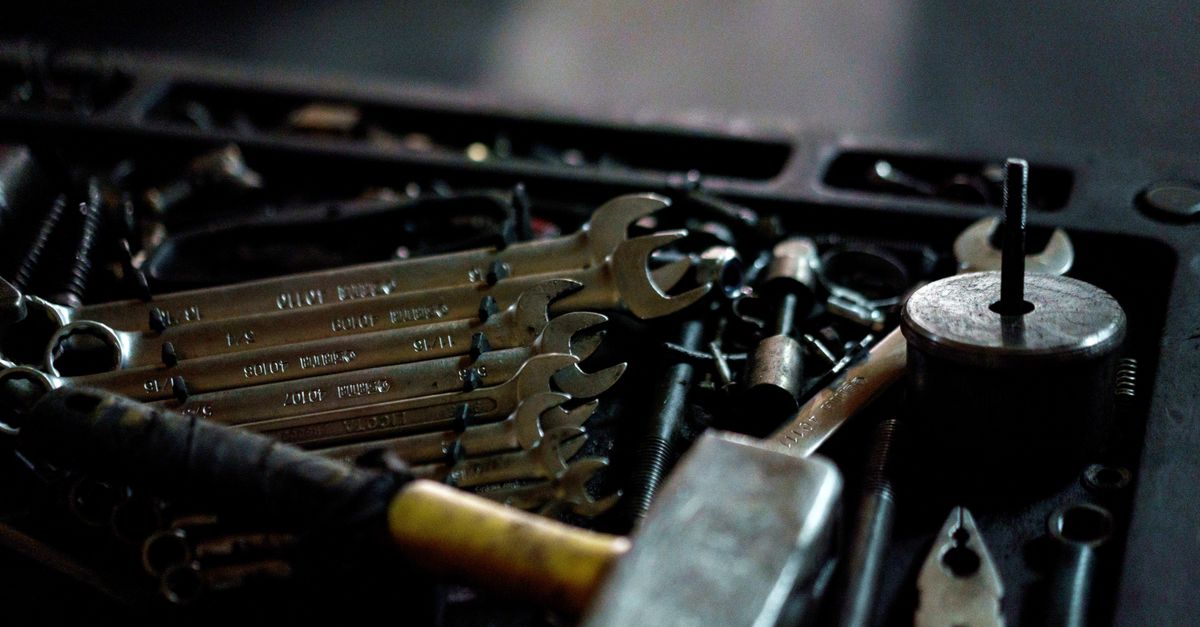
When one of our technicians pulls up to a home on Whitehall Road or meets a driver stranded in the Anderson Mall parking lot, they arrive with a purpose-built kit that most people have never seen up close. The tools inside that bag are the product of years of hands-on experience and ongoing training — and understanding what they are, and why each one matters, helps you appreciate exactly what a professional mobile locksmith does that a DIY YouTube video simply cannot replicate.
This article walks you through the real equipment our Pro Anderson Locksmith technicians carry on every service call, from the specialty hand tools used on a stubborn mortise lock to the portable key-cutting machines that let us produce a working key right at your curb. We will also clear up some of the terminology and specializations you might encounter when researching locksmith services, so you can make a genuinely informed decision the next time you need help.
## What Tools Do Locksmiths Use? The Everyday Carry of a Mobile Technician
A well-stocked mobile locksmith van is essentially a traveling hardware workshop. Our Anderson technicians organize their toolkit into several categories: picking and bypass tools, measuring and diagnostic instruments, cutting and programming equipment, and installation hardware. Every item earns its place because mobile work gives you exactly one trip to get the job done right — there is no shop bench to run back to. The result is a kit that looks modest on the outside but handles everything from a straightforward door knob lock replacement to a complex commercial locksmith job on a multi-point entry system.
Among the most-used hand tools are tension wrenches and pick sets — used legally and professionally on locks our technicians have verified ownership over before touching. These are precision instruments, not the crude movie props most people imagine. Alongside them sit plug followers (for reassembling pin-tumbler cylinders after a rekey), key extractors for broken key removal, and a bump-resistant inspection light for reading a keyway in a dark hallway or a poorly lit parking garage. Every tool is maintained and regularly replaced, because a worn pick or a dull extractor costs time and can damage a perfectly good lock.
## Mortise Lock Specialty Tools — Why This Lock Demands Its Own Kit
The mortise lock is one of the most common lock types our technicians encounter in Anderson's older homes and commercial properties, and it is also one of the most misunderstood. Unlike a cylindrical lockset that presses through a round hole in the door, a mortise lock sits inside a rectangular pocket — the mortise — that is routed into the door edge. That design means our technicians need specific tools just to service it properly, starting with a mortise cylinder wrench to remove the cylinder without marring the case, and a set of precision calipers to answer the question customers often ask: how do you measure a backset on a mortise lock? The backset is the distance from the edge of the door to the center of the keyhole, and getting it exactly right is critical — a cylinder that is even a few millimeters off will bind, misalign the cam, and either lock the door permanently or prevent it from latching at all.
Our technicians also carry a selection of mortise cylinder tailpieces in varying lengths, because the cam depth inside different mortise cases is not standardized. A residential Schlage mortise cylinder does not share the same tailpiece length as an older Kwikset commercial unit. We keep a measurement card that maps common door thicknesses to the correct tailpiece, so we are not guessing in the field. If a customer asks how to change a lock on a door that already has a mortise system, our advice is almost always to call a professional first — measuring the case depth, spindle size, and backset before ordering any hardware saves a frustrating and expensive return trip to the hardware store.
## Key-Cutting Machines, Transponder Programmers, and Electronic Lock Tools
Portable key-cutting machines have transformed mobile locksmith work. Our van carries a compact code-cutting machine that can produce keys by code — meaning we look up the factory-original key cuts for a lock by its code number rather than tracing an existing key. This matters enormously for house lockouts where the homeowner has no working spare, and for situations where every copy of the original key has been lost. For automotive work, we carry a laser-cut (also called sidewinder) cutting machine specifically for the high-security car keys that now dominate the market — a key that cannot be duplicated at a grocery store kiosk. If you are locked out of a vehicle on I-85 near the Anderson exit or in a downtown parking deck, this is the machine that gets you back on the road without a tow truck. If you have questions about our automotive services or want us on the way right now, call (704) 850-6756 — we answer 24/7.
Electronic lock tools have become just as essential as mechanical ones. Our kit includes an EEPROM reader and programmer for automotive key fobs, an OBD-II diagnostic interface for programming transponder keys to modern vehicle immobilizers, and a code-retrieval device for evaluating smart deadbolts and keypad locks. When a customer asks how to change the code on a door lock — particularly a keypad or smart lock model — we can walk through the process with them on-site and confirm the new code is saving correctly. For models like Honeywell electronic deadbolts, the process involves entering a specific master code sequence that resets the user PIN slots; our technicians know these sequences for dozens of current and discontinued models, saving customers from a frustrating 45-minute call with a support chatbot.
## Locksmith Specializations and Terminology: What Each One Actually Means
The word locksmith covers a surprisingly wide range of specializations, and understanding them helps you call the right person the first time. Residential locksmiths handle home lockouts, rekeying, deadbolt installation, and door knob lock upgrades. Automotive locksmiths focus on vehicle entry, key cutting, and transponder programming. A commercial locksmith works on the heavier-duty hardware found in offices, warehouses, and retail spaces — panic bars, access control systems, master key hierarchies, and high-security mortise lock systems that can cost significantly more than residential hardware. Emergency locksmith service, which is what we provide around the clock here in Anderson, means a technician dispatched immediately regardless of the hour, trained to work on all three categories. Our team handles all of them, which is why a single call to (704) 850-6756 covers whether you are standing outside your front door at 2 a.m. or managing a broken access panel at your business on the North Main Street corridor.
A few terms that trip people up: rekeying means changing the internal pin configuration of an existing cylinder so old keys no longer work — far less invasive than a full lock replacement. A rim lock (in the residential and commercial context) refers to a surface-mounted lock body bolted to the inside face of a door, common in older Anderson homes and apartments, as opposed to a mortise lock that recesses into the door itself. You may also encounter the term rim lock in an entirely unrelated context — motorcycle riders sometimes search for what a rim lock does on a dirt bike, which refers to a small metal clamp inside a tube-type tire that prevents the inner tube from rotating and tearing the valve stem. That is a tire tool, not a locksmith tool — but it is a good example of why precise terminology matters when you are searching for help.
## Regulation, Training, and How to Choose a Locksmith Anderson SC Residents Can Trust
A common question from Anderson homeowners is: does South Carolina require a locksmith license? As of now, South Carolina does not have a statewide licensing requirement specifically for locksmiths, which means the barrier to entry for someone calling themselves a locksmith is low. This makes the question of how to choose a locksmith more important here than in states with mandatory credentialing. What should you look for? Ask whether the technician can verify your ownership or tenancy before working — any experienced professional will request ID and proof of address before opening a lock. Ask whether the company is insured. Ask for an exact price confirmed before any work begins. At Pro Anderson Locksmith, we confirm an up-front quote that accounts for the lock or vehicle type, the time of day, travel distance to your Anderson location, and any parts required — and that number does not change when the job is done.
Internationally, regulation varies significantly. In the United Kingdom, locksmith work is largely unregulated at the national level, though industry associations encourage voluntary accreditation and a code of conduct — a similar landscape to South Carolina. Several U.S. states do require locksmiths to hold a state-issued license, pass a background check, and carry a surety bond; those frameworks exist to protect consumers from unscrupulous operators. Because South Carolina has no such mandate, the responsibility shifts to the consumer to vet providers carefully. Our technicians at Pro Anderson Locksmith are trained, experienced professionals — we are insured, we verify ownership before any bypass work, and we stand behind every job. If you ever have a question about our process, our team is reachable at (704) 850-6756 any hour of the day or night.
## 25 Services Our Anderson Technicians Handle on Every Call
Our mobile kit is stocked to cover a wide range of real-world needs. Here is a specific list of what our Anderson technicians are equipped to perform on a single dispatch: residential door lockout entry, automotive lockout entry, rekey of single cylinder deadbolt, rekey of double cylinder deadbolt, mortise lock cylinder replacement, mortise lock case repair, door knob lock installation, deadbolt installation on a new door prep, broken key extraction from a door cylinder, broken key extraction from an ignition, transponder key cutting and programming, key fob battery replacement and pairing, high-security key duplication by code, master key system setup for multi-unit properties, panic bar and exit device installation, surface-mounted rim lock installation and repair, electronic keypad lock installation, electronic keypad code reset assistance, smart lock Wi-Fi module pairing and troubleshooting, door frame and strike plate reinforcement, mailbox lock replacement, padlock and hasp installation, safe opening (non-destructive dial and electronic), safe combination reset, and access control keypad replacement for small commercial doors.
Each of those 25 services reflects a specific tool or set of tools in our van — nothing on that list requires a return trip to a shop. The factors that shape your final quote include the specific lock brand and model, whether the job is residential, automotive, or commercial, your location within the Anderson area, the time of the call, and whether replacement parts are needed. We confirm that price before the first wrench turns.
Frequently asked questions
How much do locksmiths cost near me in Anderson, SC?+
There is no single flat rate because the final price depends on several variables: the type of lock or vehicle involved, whether it is a straightforward rekey or a full mortise lock replacement, the time of day (overnight emergency calls involve different logistics than a midday appointment), your distance from our base in the Anderson area, and whether replacement hardware or key blanks are needed. What we can promise is that we confirm an exact up-front quote before any work begins — the number you agree to is the number on your invoice. To get a specific quote for your situation, call (704) 850-6756 any time.
How much is a locksmith per hour — do you charge hourly or by job?+
Most mobile locksmith work, including everything we do at Pro Anderson Locksmith, is quoted per job rather than per hour. An hourly rate structure would penalize customers whose jobs happen to be straightforward and quick, which does not feel fair to us. Instead, we assess the specific task — installing a door knob lock, programming a transponder key, servicing a mortise lock — and give you one clear price before we start. The factors that move that price up or down are the complexity of the hardware, parts required, and logistics of the call.
Should I tip my locksmith?+
Tipping is entirely optional and never expected. A locksmith, like a plumber or an electrician, is a skilled tradesperson providing a quoted service — the price you agreed to is considered full compensation. That said, if a technician arrived quickly at 3 a.m., worked carefully on a tricky mortise lock, and left your door better than they found it, a tip is always a genuine and appreciated gesture. It is completely your call.
How to change a code on a door lock — can I do it myself, or do I need a locksmith?+
For most modern electronic deadbolts and keypad locks, changing the user code is something a homeowner can do without tools. The process generally involves entering the existing master or programming code, pressing a designated function button, and entering the new code twice to confirm. The exact sequence varies by brand and model — Honeywell units, for example, use a specific master-code entry that differs from other manufacturers. Where people run into trouble is when the master code has been lost, the lock is not saving the new code, or the lock is an older model with no clear documentation. In those cases, our technicians carry the electronic tools and manufacturer data to resolve it on-site. If you are stuck, call (704) 850-6756 and we will walk you through it or dispatch someone to help.